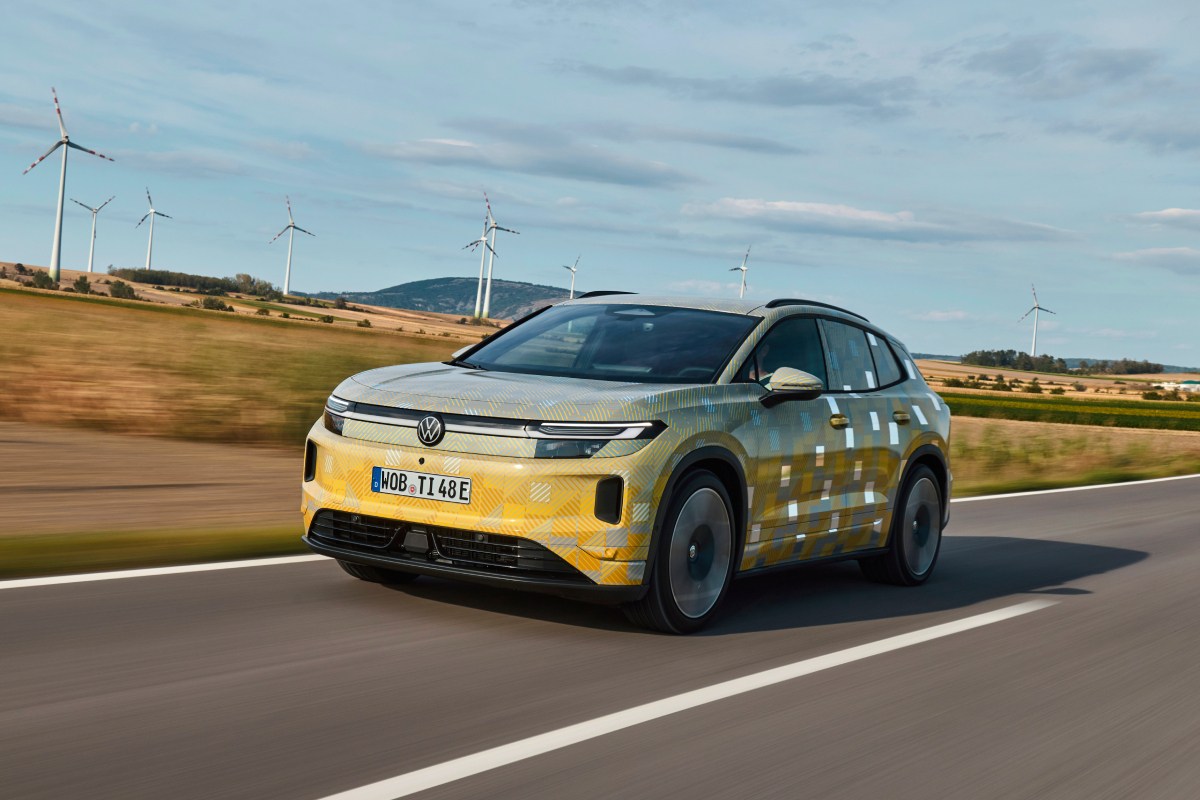
Volkswagen is retiring the ID.4 and putting its best-selling SUV name on the replacement. Early prototype drives suggest it’s quieter and comfier, but the charging hasn’t moved on as much as it should have.
Volkswagen’s ID naming never quite stuck with buyers, and the company seems to have admitted as much. The ID.2 became the ID. Polo, and now the ID.4 is being replaced by the ID. Tiguan, borrowing the name of one of the most popular cars VW makes. Tiguan and Tayron deliveries passed a million globally last year, so if you’ve got a badge people already trust, putting it on the electric version is a sensible bit of business.
The ID.4 and its coupe sibling, the ID.5, have sold more than 950,000 between them since 2021. That’s a decent result, but the name never meant much to anyone outside the car industry. “Tiguan” does.
The full reveal is due in early October, with the car going on sale in 2027. A handful of outlets have already driven late-stage prototypes, and the early picture is a family SUV that’s been refined more than reinvented.
What’s the Volkswagen ID. Tiguan like to drive?
Top Gear drove a camouflaged prototype on roads near Vienna and found it quieter, comfier and plusher than the ID.4, with the ride staying settled on 21-inch wheels and the steering unbothered by potholes. WardsAuto came away with much the same impression, describing a car built around comfort and ease of driving, with no attempt to turn it into a sports SUV.
That sounds like the right call to me. Nobody buys a mid-size electric family SUV to chase apexes, and the ID.4’s weak spot was always refinement. It felt a bit cheap and a bit noisy for the money, and that’s exactly what VW appears to have worked on.
Not every early drive was glowing, though. Auto Express tried an earlier prototype last year and felt it wasn’t drastically different from the ID.4 on the road, although that drive was over smooth tarmac that didn’t ask much of the suspension.
Volkswagen ID. Tiguan battery, range and charging
There will be two batteries. The smaller 58kWh lithium iron phosphate pack is expected to manage around 280 miles, while the 77kWh nickel manganese cobalt battery in the Pro and Pro 4Motion versions stretches to a claimed 373 miles in the rear-drive Pro. That’s a small step on from the ID.4’s 351 miles, competitive for the class without leading it.
Charging is where I’d have liked more. Peak rates are reported at 105kW for the smaller battery and 165kW for the larger one, the same as the ID.4, which works out at roughly 26 and 29 minutes for a 10 to 80 per cent top-up. That’s perfectly usable, but the Tesla Model Y and several of the new Chinese rivals charge faster, and a replacement model was the obvious moment to catch up. Every version does get 11kW home charging, plus vehicle-to-load through VW’s PowerSocket adaptor, so you can run a kettle or a laptop off the battery.
Volkswagen ID. Tiguan power and performance
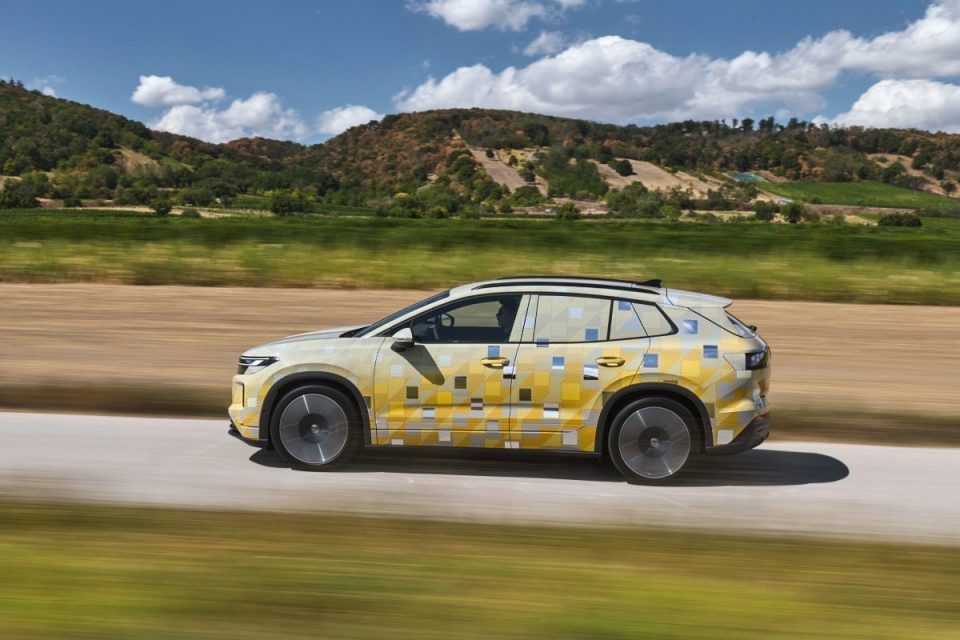
Power outputs carry over from the ID.4. The 58kWh rear-drive model makes 188bhp, the 77kWh rear-drive Pro gets 282bhp, and the dual-motor Pro 4Motion tops the range with 295bhp and four-wheel drive.
Volkswagen hasn’t published acceleration figures yet, and Top Gear’s seat-of-the-pants estimate for the Pro was around seven seconds to 62mph. Brisk enough for a family car, and in line with the brief. The 4Motion makes most sense if you deal with slippery roads regularly or need to tow, with a towing limit of up to 2,000kg expected, handy if there’s a caravan in the picture.
Volkswagen ID. Tiguan interior and boot space
The prototypes had their dashboards covered, so the full picture will have to wait for October. What is visible is a bar of physical buttons similar to the one in the ID. Polo, proper controls back on the steering wheel and a large central screen sitting on top of the dash. Anyone who spent time jabbing at the ID.4’s touch-sensitive sliders will be glad to see real buttons return.
The ID. Tiguan is around 44mm longer than the car it replaces, and there looks to be more space in the back, plus a front storage compartment for cables. Volkswagen hasn’t released boot figures yet. Production will be at VW’s Emden plant in Germany.
Volkswagen ID. Tiguan UK price and on-sale date
The reveal is due in early October, with UK pricing and specification to follow and cars arriving in 2027. Britain is expected to skip the entry-level Trend trim, so even the cheapest UK version should come with heated front seats and steering wheel, wireless phone charging and dual-zone climate control. VW’s Dynamic Chassis Control adaptive dampers will be optional, and given how firmly this car is pitched at comfort, I’d be surprised if most buyers need them.
The current ID.4 starts at £36,995, and the early expectation is that the ID. Tiguan lands close to that. That number matters more than it looks. The Government’s Electric Car Grant only applies to cars priced under £37,000, so where VW pitches the entry model could decide whether it qualifies at all. For company car drivers, electric cars still sit on a 4 per cent benefit-in-kind rate this tax year, which keeps the ID. Tiguan cheap to run through a business whatever the list price.
Volkswagen ID. Tiguan verdict
On what we know so far, the ID. Tiguan looks like the car the ID.4 should have been from the start. It’s quieter and roomier, it’s easier to use, and it wears a name people already recognise. VW has plainly listened to what owners complained about.
My reservation is charging. Carrying over the ID.4’s 165kW peak on a car that won’t reach customers until 2027 feels like a missed chance, particularly with Chinese rivals undercutting VW on price and beating it on charging speed. If VW gets the entry price under £37,000 and October holds no nasty surprises, this could become the sensible default for families going electric. If it creeps well past the ID.4’s price, that charging gap will be much harder to overlook.





