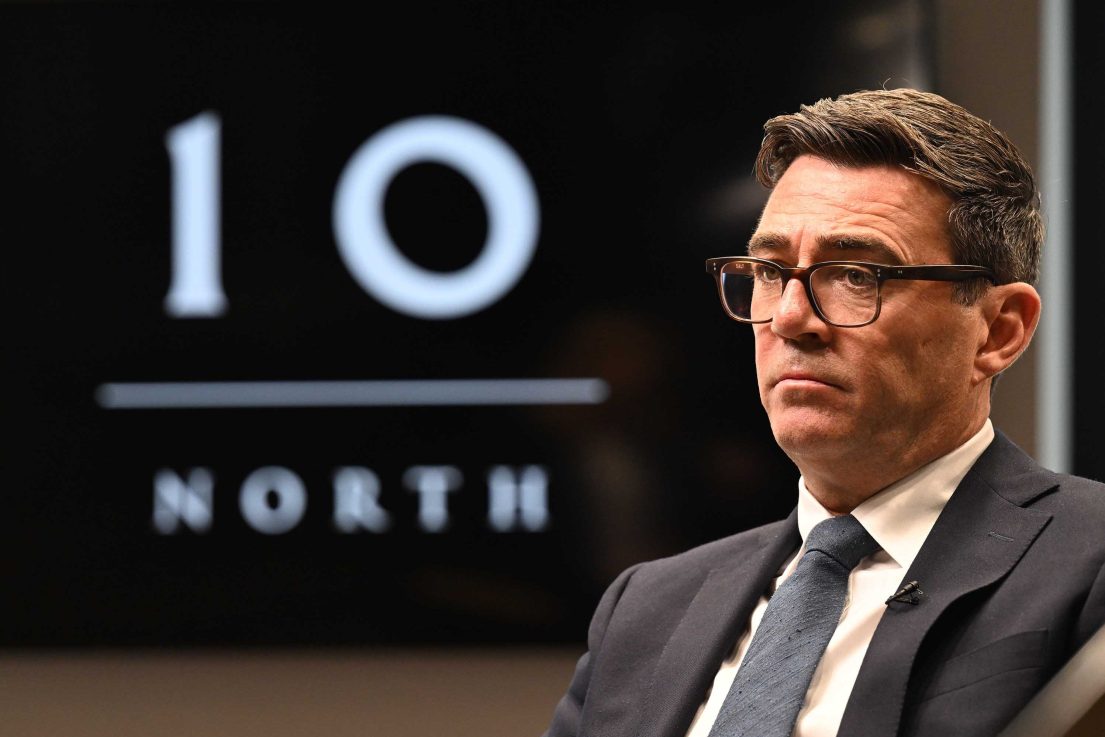
Andy Burnham has said he was “very aware” of John Healey’s demand to spend at least £9bn more a year on defence when he appointed him as Chancellor.
The Prime Minister has said he would ensure Sir Keir Starmer’s Defence Investment Plan (Dip) was “fully funded” in an interview with the BBC as his “first challenge”.
But when he was asked specifically about Healey’s call for defence spending to be raised to three per cent of GDP by 2030, Burnham refused to commit to immediate higher spending.
“I appointed my new Chancellor [while] very aware of what he had said about the critical importance of defence spending,” Burnham said.
“I am absolutely committed to what we’ve promised our NATO partners, and that is my commitment.”
Healey resigned from Starmer’s government over his failure to secure further funding for the Dip. The former defence secretary hit out at Starmer and former Chancellor Rachel Reeves for being “unwilling” and “unable” to give the military a substantial injection of cash.
He specifically criticised the government for failing to commit to raise defence spending to three per cent of GDP by 2030, which would mean that an extra £9bn would be spent each year on national security.
Devolution debate to erupt
Burnham has so far made a series of bold pledges around energy price cuts and ending rough sleeping. He has also inherited other hefty bills from Starmer, including having to fund a doctors’ pay settlement and fill a £4.7bn shortfall in Dip funding over four years.
The series of pledges is set to make Healey’s Budget this year all the more difficult, with public finances set to be hammered by the latest energy price shock pushing up bond yields and damaging UK economic growth.
He is expected to make further radical announcements around devolution and social care over the coming days, which could further complicate the fiscal picture.
It has been reported that mayors could be offered further revenue from income taxes to spend on local investment, according to The Sunday Times, although this will not extend to devolved tax powers beyond what has already been announced around overnight stay levies.
Oxford Economics researchers predicted that devolution by offering mayors the ability to retain tax receipts was more likely than giving local authorities powers to raise levies. A report by the consultancy said redistributing spending “may even reduce” growth as the UK would see lower returns on investment than if productive cities kept the same amount of cash.
Economists added: “Extensive fiscal devolution, granting significant revenue-raising powers through taxation or debt issuance, potentially offers the most meaningful option for raising long-term growth. It gives local policymakers both the ability and incentive to pursue growth-enhancing reforms.”
Burnham rules out early general election
Other announcements on young people out of education, employment and training, or Neets, and social care are expected by Burnham in the coming days. Speculation suggests that he would move to make social care free at the point of use, which could cost £18.5bn a year.
In his interview with the BBC, which will only be aired in full on Monday night, the new Prime Minister also ruled out calling a snap election to fortify his political mandate.
“There’s no early general election. I don’t think people want it,” he said.





