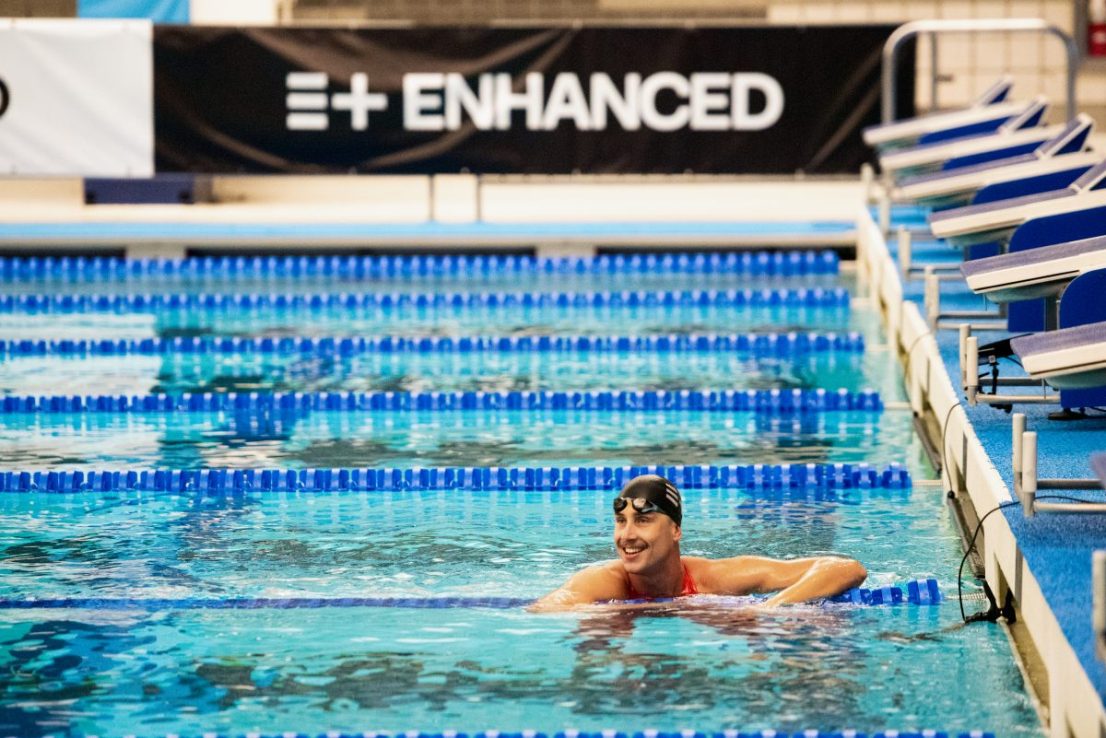
There is an irony in the fact that sponsors and broadcasters won’t touch the Enhanced Games, explains Matt Readman.
Last month it was announced that the 2026 Winter Olympic Games was the first Olympiad in 28 years to have zero failed drugs tests. The “cleanest Games for a generation” is a big moment for an organisation that has been battling against individual and state-sponsored doping for 70 years.
In contrast, next month – if all goes to plan – the inaugural Enhanced Games in Las Vegas will offer something rather different: a sporting event where performance-enhancing drugs are not just tolerated, but a defining feature.
On the surface, it feels like a neat moral split. Here is purity. There is corruption. Olympics: good. Enhanced Games: bad. But sport rarely works in black and white. And doping, in particular, has always been a greyer area than we would like to admit.
It’s a peculiar thing that doping enrages us quite so much. The fallen athlete is rarely rehabilitated in the public imagination, even when some of society’s worst criminal offenders are given a second chance. Cheating in sport incenses us, far more so than those who cheat on the financial markets, for example.
It is partly a hangover from the late 19th century, when sport was embedded with a fierce moral – and indeed Christian – code. Fair play and sportsmanship were fundamental pillars within this. The idea of competing clean is not just a rule but a virtue.
The puzzling contradiction is that sport usually champions those who do all they can to win. Athletes optimise everything: nutrition, recovery, biomechanics, psychology, sleep. Teams invest millions in marginal gains: altitude tents simulate thin air; cryotherapy chambers force muscles to go again; data is harvested, analysed, weaponised. This is all celebrated in modern professionalism.
What makes us hate doping so much?
Yes, but “rules are rules”, you might say, and if an athlete is trying to bypass them then they are a cheat. Yet there are plenty of examples of athletes who have accidentally doped, often with no added advantage, who have still been harshly punished.
In 2002, Alain Baxter was cleared of attempting to cheat but was still stripped of the first ever British alpine skiing medal. Such is the panic around drugs that even the faintest whiff of doping needs to be snuffed out with immediate and draconian force.
It would be strange if it was the unfairness that bugged us, because inequity is baked into sport.
Some nations have better funding, better facilities, better sports science. Some athletes are effectively raised in laboratories of performance; others train in relative obscurity. This is not fair. It has never been fair. And yet we don’t just accept it, we laud it as a competitive advantage.
Perhaps it’s the artificiality that infuriates fans? Does it take away from the human achievement if drugs are doing all the work? But again, this doesn’t stack up.
There are hundreds of artificial performance-enhancing drugs that are perfectly legal for athletes to take and are in fact encouraged to do so. Meanwhile, blood doping – the reinfusion of an athlete’s own red blood cells to improve oxygen delivery – uses no foreign substance at all but is banned. It is similar in effect to hypoxic chambers. But one is illicit; the other is innovation.
The biggest argument that critics – including global doping police Wada – use is that it forces athletes to take significant health risks.
But then so does elite sport itself. Athletes routinely push their bodies to extremes that would be considered reckless in any other context. They train through pain, compete through injury, accept long-term damage as the price of short-term success. Far from being hated, sport draws its breath in admiration at those that take such risks.
Lessons from Armstrong and Nike
None of these are the true problem. The real thing we hate about doping is not an athlete cheating, but the feeling of being cheated ourselves.
Sport is a fragile thing, built on belief. If we no longer buy in, the whole thing collapses. When a doping scandal breaks, the anger is so intense because we were fooled. The story we invested in – literally and emotionally – turns out to have been a fabrication.
This is why the fallout can be so severe for brands as well as athletes. The case of Lance Armstrong remains the ultimate example.
His partnership with Nike was not just commercial, it was ideological. A shared story about resilience, about defiance, about the human spirit. He himself called it “a mythic perfect story” and of course “it wasn’t true”.
When that story collapsed, it was not just Armstrong who was crushed. It was all those who had believed.
Which is where the Enhanced Games becomes, if not appealing, then at least interesting.
Because the central proposition is not simply that doping should be allowed, it is that it should be transparent. That athletes should disclose what they are taking, be medically supervised, operate within a system that acknowledges reality rather than attempting to police it into submission.
In theory, this could reduce some of the danger, it should improve fairness, but, most importantly, the viewers and sponsors go into it with open eyes.
Currently there are no brands or broadcasters willing to go near the Enhanced Games. The instinctive hatred of doping runs deep.
But look past this and you’ll see an event that reflects much of what traditional sport holds dearest: safety, fairness, transparency and pushing the limits of human possibility.
The IOC claims the Enhanced Games goes against the very spirit of sport, I’d argue they perfectly fit their own motto of “Citius, Altius, Fortius”, meaning (“Faster, Stronger, Higher”).
I am not suggesting that the Enhanced Games is a good idea, or that brands should get involved. But ironically what brands fear most about doping – being caught out – is the one thing that these games guarantee to avoid.





