“I’d say it’s a concern,” Elliott Santon, the head of global sponsorships at DHL Express, says on the state of rugby in England.
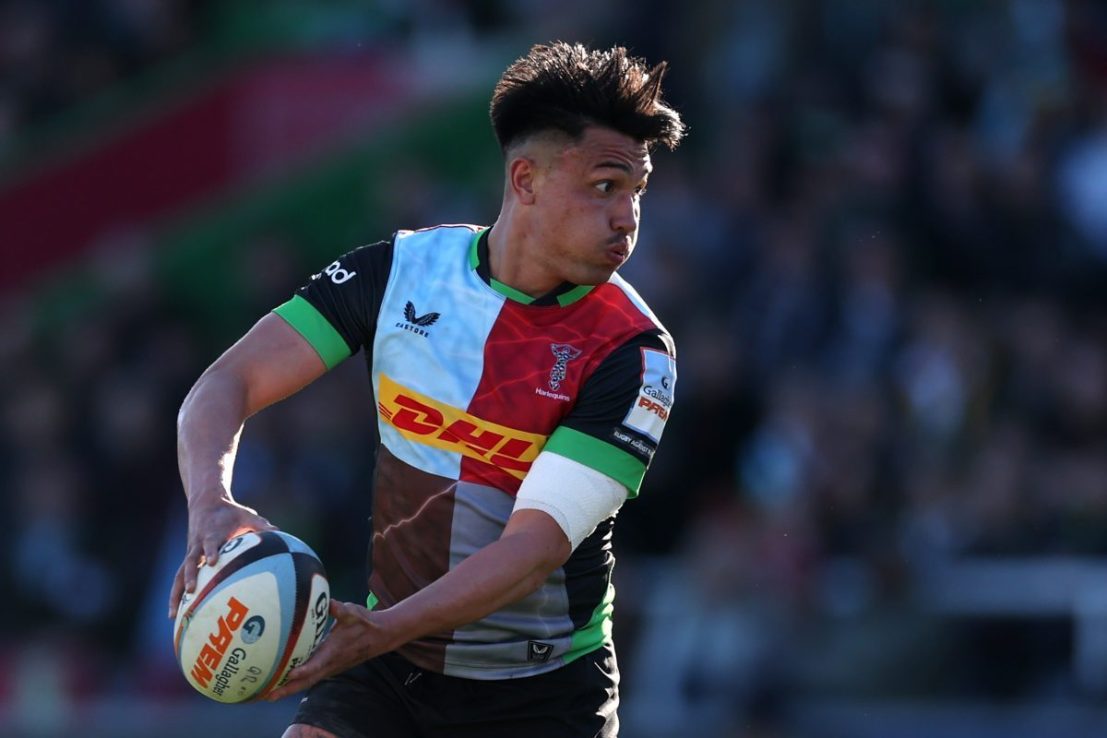
The global logistic giant is the front-of-shirt sponsor of Prem Rugby club Harlequins and has its distinctive yellow and red logo plastered on the quartered strip of the London team.
DHL is also in France with Top 14 club Stade Francais – even falling into line with club rules by switching to a monochrome version of their branding – and has deals with South African side Stormers, Irish province Munster and Investec Champions Cup organiser EPCR. On top of all that, it is a partner of both the Rugby World Cup and British and Irish Lions.
DHL’s rugby concern
So why is rugby in England raising eyebrows?
“It’s the generation coming through,” Santon tells City AM. “You’re going to get less of the older school [fans] going to rugby [and] they’re a particular demographic. So what are World Rugby and the unions doing to attract younger audiences into rugby?
“My concern isn’t so much now [but] we’re seeing it already, aren’t we? Let’s face it. We’re all we’re seeing it. My concern is, in five or 10 years, what’s it going to look like?
“Rugby is a huge sport in France, which is actually quite interesting because in the UK we’re obviously seeing slight challenges. Being really honest, I hope that it doesn’t go this way but we’re seeing that the level of fan engagement seems to be slowly decreasing.”
Delivering Dreams
The warning comes as DHL continues to be one of the most recognisable brands across global sport.
The company’s deal with Manchester United, which runs until 2027, has seen them build a football pitch in Mae Suek, Thailand, for football-mad locals – including one named Man Yoo.
Santon states that DHL has “appetite” to extend its deal with the Premier League team but insists the Delivering Dreams campaign will continue even in the unlikely event of the relationship with Sir Jim Ratcliffe’s club ending because, he says, it invests in sport, purpose and progressive pillars within the business.
And while its sporting portfolio includes the likes of Formula 1 – with the firm having a dedicated F1 logistics team – bobsleigh, skeleton and MotoGP, a move into music and festivals is on the cards as sport becomes ever-more crowded.
DHL future in sport
“Sports are definitely becoming more competitive,” Santon says. “I think audiences are also now slightly changing, main decision-makers are definitely changing and music allows us to diversify in that respect.”
Speaking frankly, the Dubai-based chief confirms that the brand is working with a UK fashion brand, akin to Supreme, on a collaboration – though he wouldn’t be drawn into revealing which – while he ruled out replacing Syrian billionaire Mohed Altrad and his eponymous scaffolding firm on the front of French international rugby shirts.
“We’re really excited to see what happens with MotoGP now that [Formula 1 owner] Liberty Media is also part of that,” he adds. “They’re really elevating it.”
DHL is almost synonymous with sporting real estate; the bold, in-your-face logo makes the logistics brand hard to ignore.
But with sport becoming so competitive, with new tech and AI sectors seemingly looking to dominate, and a health check on where it is in particular markets, such as English rugby, it may not be too long before we see less of DHL in our stadiums for matches and more at gigs and festivals. The tectonic plates of sponsorship are shifting.