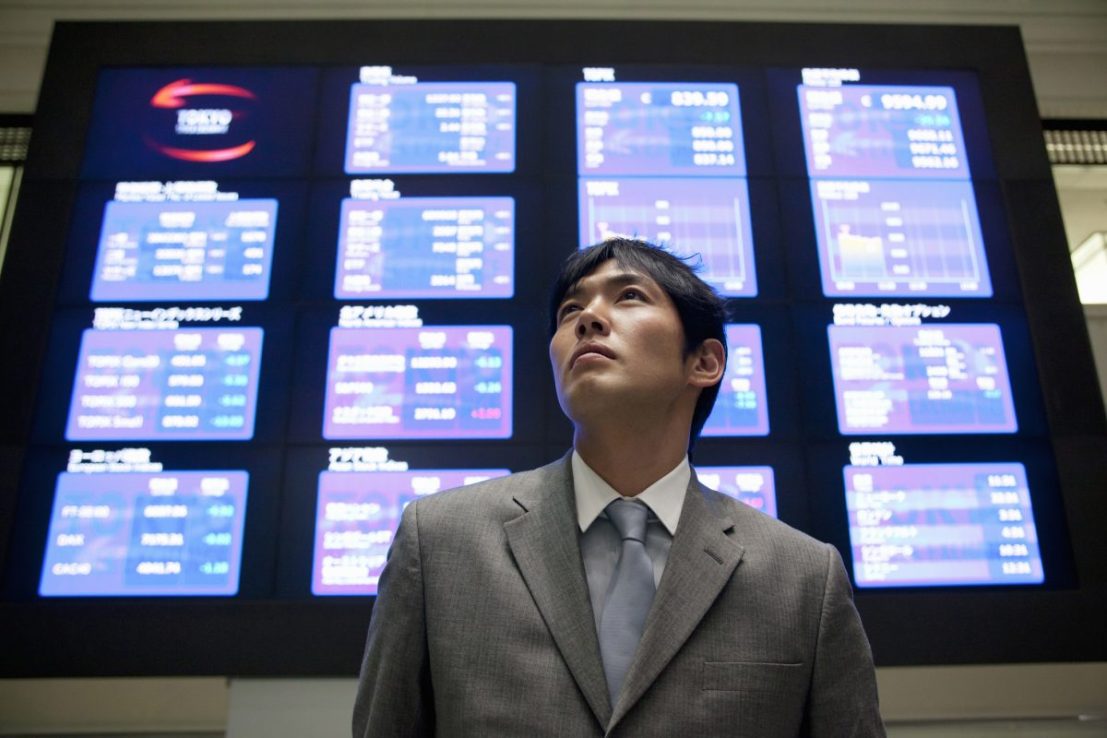
Japanese stocks surged to a record high on Monday, while wider Asian markets also experienced a boost, after Prime Minister Sanae Takaichi’s Liberal Democratic Party secured a historic election victory.
The Liberal Democratic Party (LDP) secured 316 out of 465 seats in Sunday’s election, winning a two-thirds super majority.
In response, the Nikkei 225 rocketed by more than five per cent in early trading, crossing the 57,000 yen mark for the first time.
The market closed on a 3.89 per cent increase, trading at 56,363.94 yen (£264.91), with the index up 8.7 per cent this year to date.
Markets across Asia also advanced in the wake of the Japanese election results, with South Korea’s Kospi surging 4.1 per cent to 5,298 KRW (£2.67), continuing the market’s storming rally, with the index up 110.1 per cent over the past year.
China’s Shanghai index also rose 1.4 per cent to 4,123 yuan (£437.16), while the Hong Kong index also climbed 1.7 per cent to 27,027.16.
Elsewhere, Taiwan’s Taiex gained 1.9 per cent to 32,404.62 new Taiwan dollar (£755.74).
Supporting Japanese economy
The rally comes as Takaichi as widely expected to pursue market-friendly policies, with her party’s landslide victory enabling her to advance her pro-business agenda without extensive negotiations with opposition parties.
Takaichi told reporters on Sunday that she would engage in a “responsible yet aggressive” fiscal policy and would not reshuffle her Cabinet.
Market commentators say Takaichi’s policies could boost the Japenese economy.
The nation’s economy has become increasingly muted, after the ageing population shrunk the workforce and hiked social care costs.
Hisashi Arakawa, head of Japan equities at Aberdeen Investments, said: “The win gives the political room for Sanae Takaichi to advance her pro-growth agenda.
“This includes expansionary fiscal spending and increased strategic investments in areas such as semiconductors, AI, energy security, defence and shipbuilding. There is also talk around suspending the eight per cent consumption tax, which would also help lift domestic consumption.
“On governance, the Financial Services Agency is also reportedly looking to amend the corporate governance code this year and encourage companies to put their excess cash to work by investing more in their businesses.”
Arakawa noted that while short-term risks including “Japanese government bond yields and prevailing geopolitical tensions with China” could impact government plans, “the broader macroeconomic environment continues to work in Japan’s favour”.
Yen strengthened
The yen also strengthened against the dollar following the LDP’s victory, pulling away from levels that previously “hinted at intervention”.
But analysts warned that traders will keep an eye on the currency’s performance, after it hit its weakest point since 2024 earlier this year at 159.45 per dollar.
Kathleen Brooks, research director at XTB, said: “Now that Takaichi is politically untouchable, we may see the yen fall once again.
“However, the yen is the second strongest currency in the G10 FX space on Monday, which suggests that the market was already priced for the election result, and we may need to understand which policies she will pursue before the yen reacts.”





